


What actually adds value to a Chicago loft? A private deck or terrace of 200 square feet or more adds about 10 percent to the price for each square foot. Exposed brick adds almost nothing. These results come from eleven years of MLS sales (the database of home sales), closed through October 16, 2026. Anne Rossley, Managing Broker with Baird & Warner, Gold Coast, studied lofts in the Loop (60601, 60604), River North (60654, 60610), the West Loop (60607) and the South Loop (60605), plus Lincoln Park and Lakeview. The goal is to separate what buyers truly pay for from what only sounds nice in a listing. These numbers are averages, so use them to compare homes, not to predict the price of one home. If lofts are new to you, start with Anne Rossley's overview of Chicago lofts and what they cost.
Character Versus Value: What Loft Listings Promise
Does exposed brick increase the value of a Chicago loft?
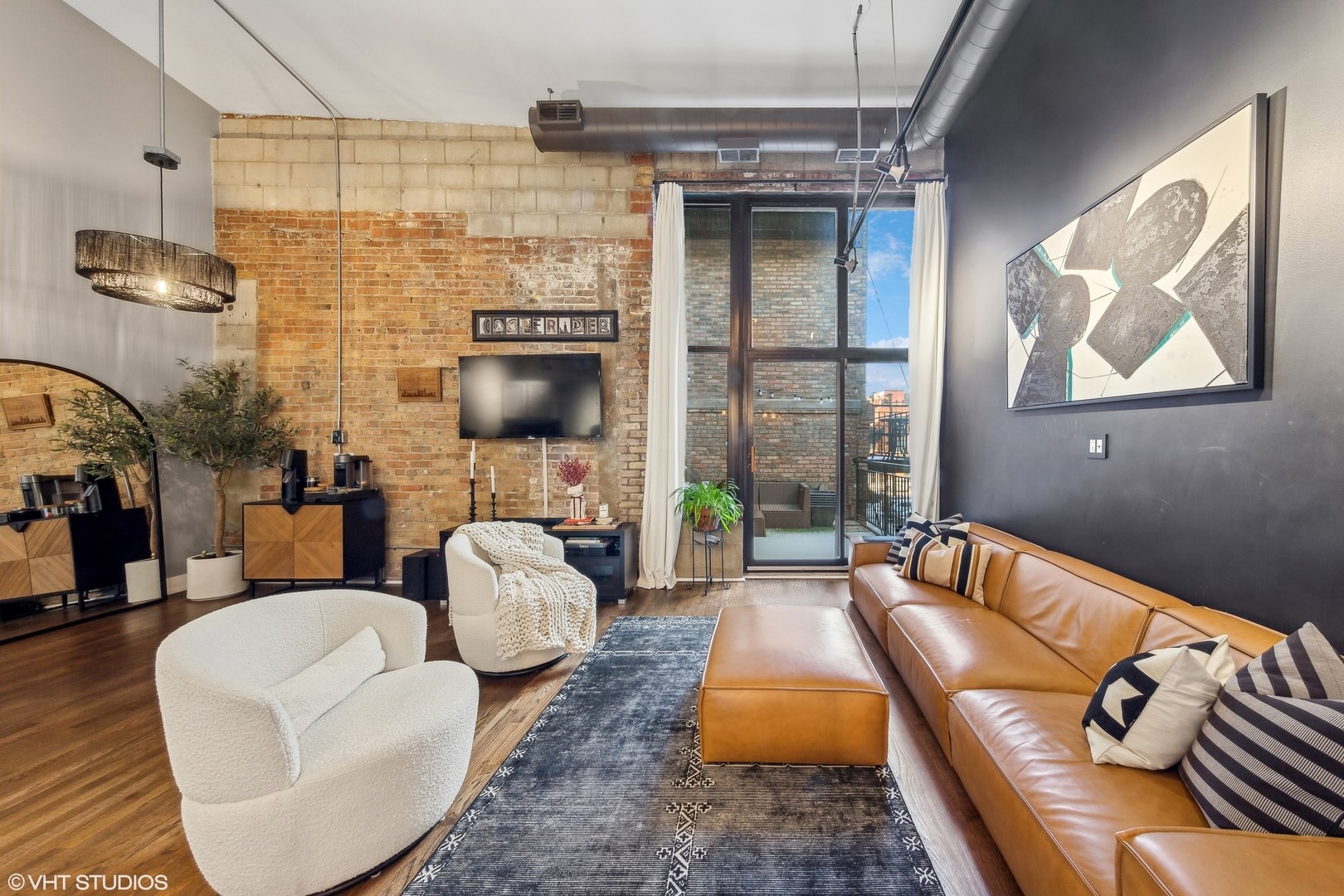
Not by itself. About one in three loft listings mentions exposed brick. Yet homes with brick sold for only 0.7 percent more, which is too small to count. Most old loft buildings come with brick, just as most condos come with a kitchen. Buyers expect it, so they do not pay extra for it.
Do high ceilings raise the price per square foot?
Not on their own. Lofts with 9 to 10 foot ceilings sold for $325 per square foot. Lofts with ceilings of 14 feet or more sold for $311. The tallest ceilings are often in older buildings, and older buildings tend to sell for less per square foot. You can compare ceiling heights yourself by browsing current West Loop homes with high ceilings and River North homes with high ceilings.
Is a timber loft worth more than a concrete loft?
A little. A timber loft has wood beams and posts, and a concrete loft has concrete floors and columns. Downtown, timber lofts sold for about $330 per square foot and concrete lofts for $310, a gap of about 7 percent. Part of that gap is location, because most timber buildings are in the Near North area and the West Loop. When we compare lofts of the same size, in the same area and year, the gap shrinks to about 3 to 6 percent. The gap between the best and worst buildings is about $290 per square foot, so the building matters much more than the frame. Anne Rossley's rule is to pick the building first and the frame second. Current Lincoln Park homes with beamed ceilings show the look.
Outdoor Space: The Premium That Is Real
What is a private roof deck worth in a loft building?
Inside the same building, a private roof deck adds 8 percent per square foot. A shared roof deck adds almost nothing, only 0.2 percent, because every owner can use it. Only 6 percent of the sales we studied had a private roof deck, while 30 percent mentioned a shared one. So read each listing closely. You can see current homes with roof decks in River North, Fulton Market, the Loop and West Town.
How large does a private deck or terrace need to be?
Size matters, but only up to a point. A private deck under 200 square feet added nothing. A deck or terrace of 200 to 399 square feet added about 10 percent, and one of 400 square feet or more added about the same. In dollars, that is roughly $35,000 to $50,000 at the median sales price, which is the middle price of all the sales. Only about 125 sales listed a deck size, so treat 10 percent as a range from 7 to 14 percent. Large decks also took longer to sell, about 41 days for 400 square feet and up. Those homes often cost more than $500,000, which is part of the reason.
Renovation, Service and Location Details
Does renovating a loft pay off?
Yes, and how recent the work is matters. Lofts renovated in the last 10 years sold for $325 to $336 per square foot. Lofts renovated 10 to 20 years ago sold for $299, which is about 10 percent less. Listings that say "renovated" or "updated" add about 2.6 percent on top of that. To plan a budget, read Anne Rossley's guide to remodeling projects that boost home value and her checklist of what to fix, update and do before listing.
Which smaller features show up in the price?
Some small features do add to the price. A doorman or 24-hour staff adds 3.4 percent, and a corner unit adds 2.7 percent. Views and floor-to-ceiling windows each add 2.3 percent, and included parking adds 1.7 percent. The word "historic" does not help. Listings use words like "historic" and "vintage" more often now, 25 percent of the time against 14 percent ten years ago, but those homes do not sell for more. For more ideas, read luxury upgrades that matter and what Chicago condo buyers want in 2026.
How to Use These Numbers
What should loft sellers and buyers do with this?
Sellers should lead with a private outdoor space, a recent renovation and building services. Do not count on brick or tall ceilings alone. Buyers should choose the building and the location first, and then ask what outdoor space and updates come with the unit. Anne Rossley has worked in Chicago real estate since 1987 and has completed 540+ transactions. She compares a loft with recent sales in its own building before she suggests a price.
The Bottom Line on Chicago Loft Value
Outdoor space, a recent renovation and the right building raise the price. Exposed brick, tall ceilings and the word "historic" do not.
Contact Anne Rossley at Baird & Warner Gold Coast | 773-620-5333 | anne@rossley.com | www.annerossley.com for a FREE 2026-27 Market Strategy Session