


As of August 3, 2026, Fannie Mae eliminated the simplified "Limited Review" that used to let most condo loans skip a deep look at a building's finances. Nearly every condo loan now requires a Full Review of the association's budget, reserves, insurance, and litigation history — and a second change, a jump in the required reserve contribution, takes effect January 4, 2027. Together, these rules can determine whether your building qualifies for financing at all, which directly affects list price, buyer pool size, and closing timelines.

What Changed on August 3, 2026
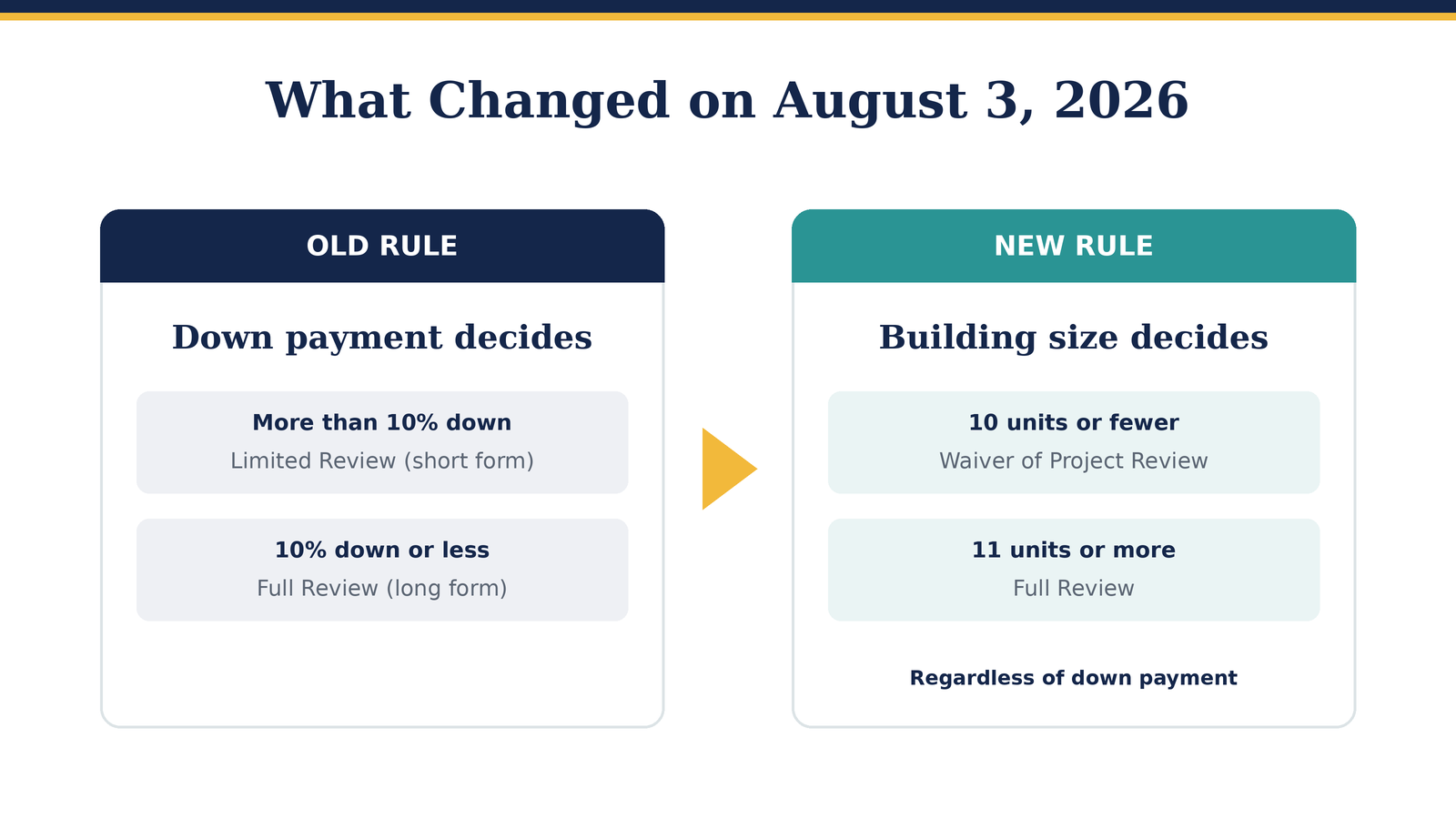
Fannie Mae retired its Limited Review process for condo loans. Previously, a buyer putting down more than 10% often qualified for a short-form review that skipped most financial scrutiny of the association. That shortcut no longer exists.
Buildings With 10 Units or Fewer
Small buildings now qualify for a Waiver of Project Review. Lenders mainly confirm the building carries adequate insurance and ask a handful of basic questions — no budget or reserve analysis required. This is actually simpler than the old rules for six-flats, eight-unit buildings, and similar small associations, as long as they aren't part of a larger master association.
Buildings With 11 Units or More
Every loan now requires a Full Review: the association's operating budget, reserve funding, pending litigation, insurance coverage, and delinquency rate are all examined, regardless of the buyer's down payment. There is no more "large down payment, easy pass."
The 15% Reserve Requirement Coming January 2027
Every condo association has long been required to contribute a share of its operating income to reserves. That minimum has been 10% for years. Starting with loan applications dated January 4, 2027, it rises to 15% of budgeted assessment income.
This matters now, not later, because condo boards are finalizing their 2027 budgets this fall. A board that simply rolls last year's budget forward — without updating the reserve line to 15% — can cause its building to fail Full Review the following year. Amending an already-approved budget requires a board vote and formal notice, which is not a fast process once a buyer is already under contract.
Two Ways to Meet the Requirement
- Budget at least 15% of assessment income directly to reserves, or
- Have a reserve study updated within the last three years, with the budget following its highest recommended funding level
How This Affects Condo Sellers
Warrantability Determines Your Buyer Pool
If a building fails review — due to a budget shortfall, unresolved deferred maintenance, excessive delinquency, or missing insurance — Fannie Mae places it on the non-warrantable list. Once that happens, conventional financing is unavailable for every unit in the building, not just the one that triggered the problem. Only cash buyers and a small number of portfolio lenders remain in the pool.
Why This Affects List Price
Fewer eligible buyers means less competition for your unit, which typically means a lower sale price and a longer time on market. A listing agent who doesn't know the building's warrantability status before setting a price risks pricing as if every buyer is available, then watching financed offers fall through.
Delinquency and Deferred Maintenance Are the Two Biggest Red Flags
If more than 15% of owners are 60 or more days behind on dues, the building is flagged. Similarly, if there's an unresolved safety-related project — a balcony repair, roof replacement, structural issue — a lender will not close a loan until the work is finished, even if the seller has agreed to cover the special assessment.
How This Affects Condo Buyers
Jumbo Loans Are Not Exempt
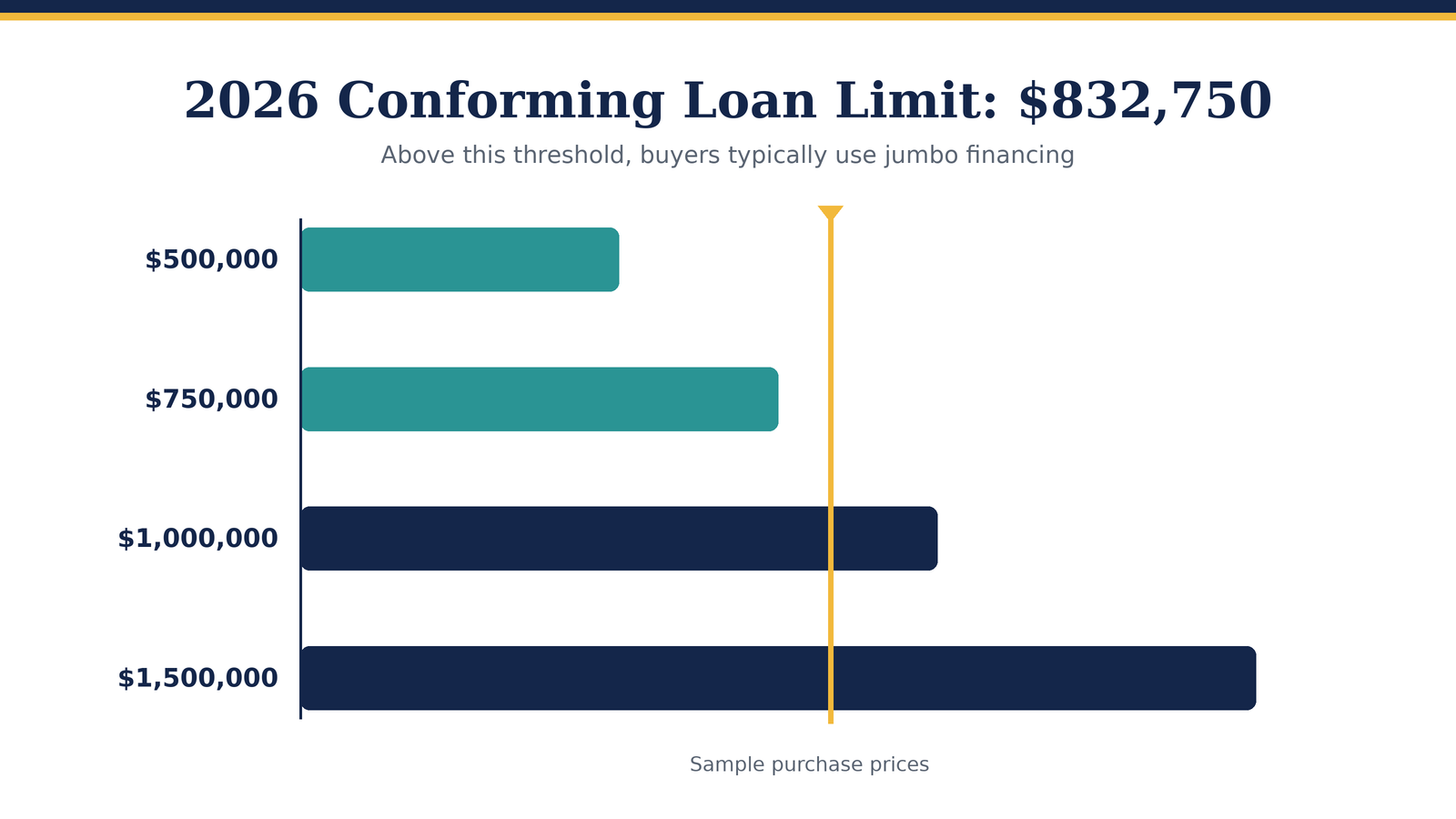
Fannie Mae's conforming loan limit for 2026 is $832,750. Above that threshold, buyers typically use jumbo financing — but most jumbo lenders follow the same Fannie Mae/Freddie Mac condo questionnaire. A higher purchase price does not exempt a building from the same reserve, litigation, or maintenance scrutiny.
Questions to Ask Before You Make an Offer
- Is this building currently approved by Fannie Mae, and when does that approval expire?
- What percentage of assessment income is budgeted to reserves this year and next?
- Has any unit here had a loan denied because of the association's questionnaire answers?
- Is a special assessment approved, pending, or under discussion?
- What is the current delinquency rate among owners?
Avoid Short Closing Windows
Unless you're paying cash or the building already holds a current Fannie Mae approval, a closing window under 30 days is one of the riskier moves a buyer can make in this environment — there often isn't enough time to complete a Full Review if anything is incomplete.
Frequently Asked Questions
What is a non-warrantable condo?
A non-warrantable condo is a unit in a building that Fannie Mae has determined does not meet its project standards — often due to budget or reserve shortfalls, unresolved litigation, excessive delinquency, or unfinished safety repairs. Only cash buyers or portfolio lenders can typically finance a purchase in a non-warrantable building.
How do I find out if my condo building is Fannie Mae approved?
Ask your lender or real estate agent to check the building's status. Approval status generally falls into three categories: currently approved (with an expiration date), never reviewed, or on the non-warrantable list.
Do the new condo rules apply to jumbo loans?
Yes. Jumbo lenders generally follow the same Fannie Mae/Freddie Mac condo questionnaire, so a building's financial and physical condition matters just as much on a $1.5 million purchase as it does on a $500,000 one.
When does the 15% reserve requirement take effect?
January 4, 2027, for loan applications submitted on or after that date. Because condo boards typically finalize next year's budget in the fall, this is relevant to anyone selling or buying in a building with 11 or more units well before that date.
🏢 GET THE FREE CONDO FINANCING CHECKLIST
Planning to sell your Chicago condo? Download the free Condo Financing Checklist and use it to start the conversation with your condo board or management company before you’re under contract.
👉 DOWNLOAD THE CHECKLIST: [CLICK HERE]
Save it, share it with your property manager or HOA board, and use it to make sure you know where your building stands.